Modular Deep Learning Mechanisms for Auditable Next-Day Wildfire Spread Prediction
Under review · arXiv preprint arXiv:2609.17763 (2026)PreprintUnder review
Computer vision · Multimodal learning · Medical AI
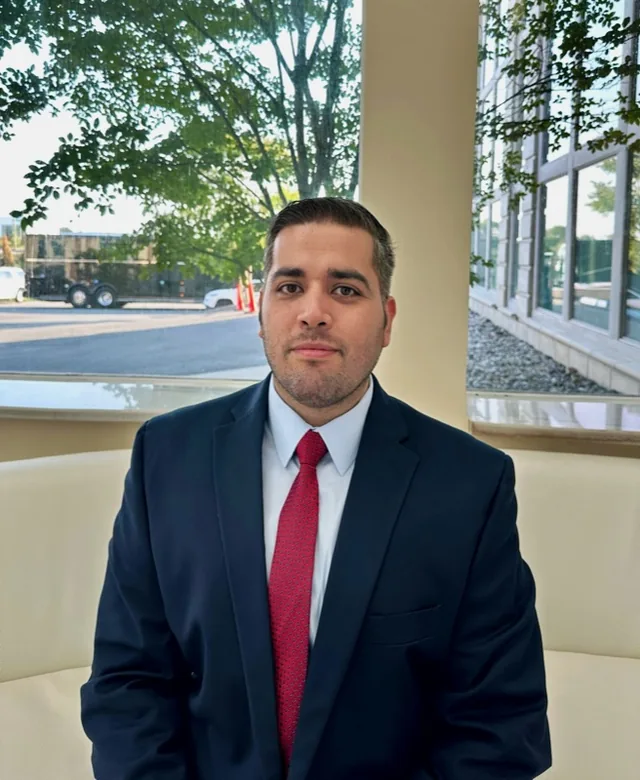
Ph.D. student in Computer Science at the University of Maryland, Baltimore County, CORAL Lab, advised by Prof. Tim Oates.
I work on computer vision and multimodal learning for AI that is useful in clinics, in the field and in assistive technology: indoor navigation for people who are blind or have low vision, vision-language models for wildfire detection, and medical image segmentation under real data constraints.
My current work at the CORAL Lab is accessible indoor navigation: turning a building's floor plan into a spatial knowledge graph that a language model can reason over, so blind and low-vision travelers get route guidance without per-building infrastructure.
I am the principal investigator of the human-subjects study behind it (UMBC IRB Protocol #1743, InVLM). Alongside, I work on vision-language models for early wildfire detection from satellite imagery, and on multi-task networks for medical images with imbalanced data.
Earlier, in Istanbul and Izmir: cell segmentation and tracking in label-free microscopy, and making deep models efficient through knowledge distillation, quantization for edge devices and graph representation learning.
Peer-reviewedPreprint
Vision-language models for early wildfire detection from satellite imagery, and auditable deep learning mechanisms for next-day wildfire spread prediction.
2 papers · 2026
Deep learning for cell segmentation in label-free phase-contrast microscopy, from still images to time-lapse wound-healing and cell-motility assays.
5 papers · 2019–2023
Knowledge distillation with clustered hint points, and residual variational graph autoencoders for link prediction.
3 papers · 2020–2023
Earlier work on edge detection, transfer learning for fine-grained classification, and scaling matrices for trust-region methods.
4 papers · 2015–2019
One mark per paper, in the year it appeared. Select a mark to open the paper; the same 17 papers are in the publication library.
Languages, frameworks and platforms the work is built with.
Recent and representative papers, each with its own page.
2026
Under review · arXiv preprint arXiv:2609.17763 (2026)PreprintUnder review
2026
IEEE International Symposium on Workload Characterization (IISWC) 2026Conference paper
2026
CVPR 2026 Workshop (GRAIL-V) · IEEE/CVF Conference on Computer Vision and Pattern Recognition WorkshopsConference paper
2026
IEEE International Geoscience and Remote Sensing Symposium (IGARSS) 2026Conference paper
2025
2025 IEEE International Conference on Big Data (BigData)Conference paper
2023
Expert Systems with Applications, vol. 213, 119040, 2023Journal article
New preprint on arXiv: Modular Deep Learning Mechanisms for Auditable Next-Day Wildfire Spread PredictionPublication
Paper accepted at IISWC 2026: Characterizing an On-Device Depth-Aware Multimodal Workload in Assistive Navigation for Blind and Low-Vision UsersPublication
Paper at CVPR 2026 Workshop (GRAIL-V): LLM-Guided Agentic Floor Plan Parsing for Accessible Indoor Navigation of Blind and Low-Vision PeoplePublication
Paper accepted at IGARSS 2026: WildfireVLM: AI-Powered Analysis for Early Wildfire Detection Using Satellite ImageryPublication
Paper at IEEE BigData 2025: Floorplan2Guide: LLM-Guided Floorplan Parsing for BLV Indoor NavigationPublication
M.S. Graduation & International Alumni ScholarshipAchievement
Presenting at CMD-IT/ACM Richard Tapia ConferenceConference
New Paper: Improved Autoencoder for Nuclei SegmentationResearch
Presented at STARS Celebration ConferenceConference
PURSUhInT Published in Expert Systems with ApplicationsPublication
Vodafone FutureLab Research FellowshipAward
Current directions and selected published work.
Developing an innovative indoor navigation system using Large Language Models to assist individuals with visual impairments. The system combines computer vision, natural language processing, and spatial reasoning to provide real-time navigation guidance and environmental awareness.
Principal Investigator, UMBC IRB Protocol #1743 (InVLM) · Expedited, May 2025
View ProjectDeveloping a Vision-Language Model system for early wildfire detection using satellite imagery. The project focuses on creating an AI-powered solution that can analyze environmental data and provide early warning systems for wildfire prevention and management.
Developed a novel approach for knowledge distillation by identifying informative hint points based on layer clustering. This method significantly improves the efficiency of knowledge transfer from large teacher models to smaller student models.
Developed advanced deep learning pipelines for cell segmentation in label-free optical microscopy images. The work includes both traditional CNN approaches and novel architectures for improved accuracy in medical imaging applications.
Investigated residual connections in graph autoencoders for improved representation learning on graph-structured data. The work contributes to the field of graph neural networks and unsupervised learning.
Technical implementations and research software, presented as a compact browsable collection.
Multi-task deep learning platform for automated medical image analysis with advanced handling of imbalanced datasets.
Read MoreAI-powered navigation system using GPT-4 and computer vision to assist visually impaired individuals in indoor environments.
Read MoreNovel hint-based knowledge distillation framework achieving 2.5x model compression with minimal accuracy loss.
Read MoreCustom CLIP-based architecture for medical imaging with zero-shot classification and report generation capabilities.
Read MoreAdvanced GNN implementation with residual connections for improved representation learning on graph-structured data.
Read MoreScalable data processing pipeline handling 10TB+ daily with automated preprocessing and feature engineering.
Read MoreVision-Language Model for early wildfire detection and risk assessment from satellite imagery, accepted at IGARSS 2026.
Read MoreSearchable reference for Claude Code, Codex CLI and GitHub CLI — commands, flags, settings and config paths in one page, with OS-aware examples.
Read MoreA calm study desk for ADHD sessions: a focus dial, a week, wellbeing, and a shared table. English, Persian, Turkish, or Spanish. Google sign-in, or this browser only.
Read MoreResearch roles spanning accessible AI, medical imaging, computer vision, and efficient machine learning.
Current – Present
Researcher · Advisor: Tim Oates
–
Research Assistant · Supervisor: Devrim Unay
Project: Image processing and machine learning tools for phase-contrast optical microscopy time series
–
Researcher · Supervisor: Nazim Kemal Ure
Project: Optimization of Multi-Task Network on Surveillance Cameras
Project: Model Compression for Efficient Video Processing on Edge Devices
–
Research Fellowship · Supervisor: Mehmet Basaran
–
Research Assistant · Co-Advisors: Behcet Ugur Toreyin and Devrim Unay
–
Researcher (Unpaid) · Supervisor: Hazim Kemal Ekenel
Project: Kaggle Dog Breeds Identification with transfer learning
Project: Google Cloud YouTube-8M Video Understanding Challenge
Current – Present

University of Maryland, Baltimore County
Courses: Advanced Algorithms, Knowledge Graphs, Machine Learning, Computer Vision, Data Privacy
–
University of Maryland, Baltimore County
Courses: Advanced Algorithms, Knowledge Graphs, Machine Learning, Computer Vision, Data Privacy
–

Istanbul Technical University, Turkey
Courses: Image Processing, Applied Informatics in Structural Biology, Fuzzy Logic
–
University of Tabriz, Iran
Graduate Teaching Assistant at UMBC since Spring 2022: systems, AI, data science, scripting, and intro programming.
University of Maryland, Baltimore County · Spring 2022 – Present
University of Maryland, Baltimore County (UMBC), USA
Prestigious scholarship recognizing outstanding academic achievement and international student contributions to the UMBC community.
Vodafone FutureLab, Turkey
Competitive fellowship for advanced research in telecommunications and technology innovation.
Nationwide Universities Entrance Exam, Iran
Achieved top 1% ranking among 500,000+ students in the highly competitive national university entrance examination.
Interested in research collaborations, academic opportunities, or discussing ideas in AI and computer vision? I'd be happy to connect.